EnBW · Enterprise identity management
EnBW: group-wide identity management
A central solution for identity and organisational data across EnBW and its affiliated companies: developed internally on Microsoft .NET and connected to SAP and Windows Active Directory. Built and introduced as a project, the platform is operational as of .
Situation: identity data across company and system boundaries
EnBW and its affiliated companies needed a central solution for identity and organisational data management. Existing enterprise systems had to be connected with group-wide information-security requirements.
The project sat within information and communications technology security and preparation for ISO/IEC 27001. Its scope therefore combined technical integration with organisational security requirements.
Task: build and introduce a shared platform
The objective was a group-wide identity-management platform connected to SAP and Windows Active Directory. Identities and organisational assignments needed to be brought together across systems and companies.
The challenge was to consider these concerns together: an identity’s place in the organisation had to be understood alongside its representation in existing systems. The platform was to provide a central technical foundation for that work.
Approach: internal development and enterprise integration
- An internal Microsoft .NET platform: The solution was developed in-house. Custom software development and integration into the existing system landscape formed part of the same project.
- Connect SAP and Windows Active Directory: Both existing systems were integrated with the central platform, extending the work beyond the application itself.
- Consider identity and organisation together: The focus was identity data and organisational assignments across EnBW and its affiliated companies.
- Include information security: The central solution was embedded in the group’s security context, as part of preparation for ISO/IEC 27001.
Result: a central platform in operation
The project produced a central identity-management solution on Microsoft .NET with SAP and Windows Active Directory connections. Following its build and introduction, the platform is operational as of . It provides a technical foundation for managing identity and organisational data across affiliated companies.
The result brought together three layers: the business organisation, an internally developed platform and existing enterprise systems.
Implications for architecture and investment decisions
The case identifies questions that need to be considered together for a group-wide identity platform:
- Organisational boundaries: A shared solution needs to account for identity assignments across several companies.
- Data responsibility: A comparable project needs to establish which system owns each attribute and how conflicting assignments are handled.
- Integration responsibility: The internal application and its connections belong in the same architectural assessment. Changes to enterprise systems also affect the platform.
- Security context: Technical integration and organisational security requirements need to be planned together.
Basis of this account
The implementation details and operational status are based on my account of the EnBW project.
Integration model: organisation, platform and enterprise systems
The overview places the cross-company remit, the internal .NET platform and its system connections within a shared security context.

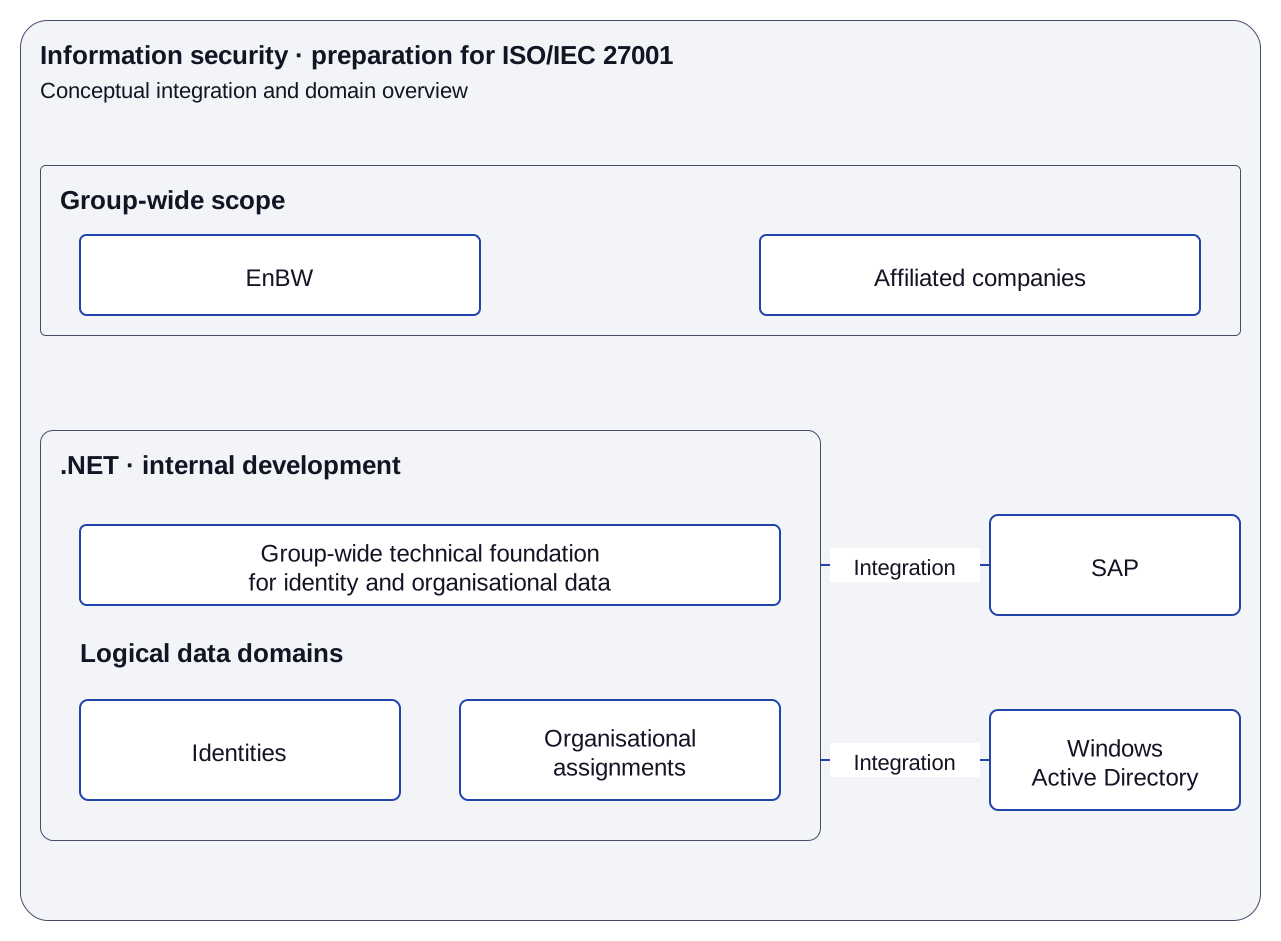
Text description of the diagram
- EnBW and its affiliated companies form the organisational scope of the group-wide initiative.
- The internal Microsoft .NET development provides the central technical foundation.
- Identities and organisational assignments are logical data domains within the business model.
- SAP and Windows Active Directory connect to the central platform. Undirected lines show integration without assumptions about synchronisation or data ownership.
- Information and communications technology security and preparation for ISO/IEC 27001 form the overarching context.
Related services, products and projects
Contact
Send the project, requirements and timeframe by email.