
Aleph Alpha · Product leadership
Pharia Government Assistant: product leadership for public-sector AI
Pharia Government Assistant (PGA) is a key product from my work at Aleph Alpha: AI assistance for public administration. My role: Team Lead Product (Vertical).
Situation: make institutional knowledge usable
Public administration needs to turn information into useful work while retaining control of its data. For an AI product, this raises a practical question: how can staff work with the information they already have and assess the answers they receive?
Aleph Alpha positions PGA around staff shortages, routine work and dispersed knowledge. The product overview describes its public-sector focus.
Task: connect AI capabilities with a product and operating model
At Aleph Alpha I worked as Team Lead Product (Vertical). My scope included RAG products, STACKIT deployment and API strategy. Pharia Government Assistant is a key product from this work.
The product question brings these concerns together: which tasks should the assistant support, what information should inform its answers, and how does the service fit the customer’s operating environment?
Approach: clear tasks, visible sources and a defined deployment
- Work with existing knowledge: Chat accepts documents and knowledge collections. References link answers to supporting passages, so users can inspect their basis. The Chat guide explains that workflow.
- Support everyday text work: Summarising, rephrasing and comparing content make the assistant relevant beyond a single question-and-answer interaction.
- Give translation a focused workflow: A separate application lets users select languages, review, edit and copy translated text. The Translation guide describes this interaction.
- Include hosting in the product: The PGA documentation specifies STACKIT’s EU01 region. Data location therefore belongs in the product discussion alongside capability and integration.
Result: a defined product for administrative work
The published product brings Chat and Translation into one public-sector offering. Its documentation describes concrete user workflows and a hosting model, giving customers a basis for evaluating how it fits their work.
Lessons for AI product decisions
- Start with a task: Evaluate a complete piece of work, including review and correction, rather than only a generated answer.
- Make evidence useful: A reference needs to help a person assess an answer. Its presence alone does not establish correctness.
- Plan for operation: Deployment, integration and responsibility need to be decided with the product scope.
Sources and scope
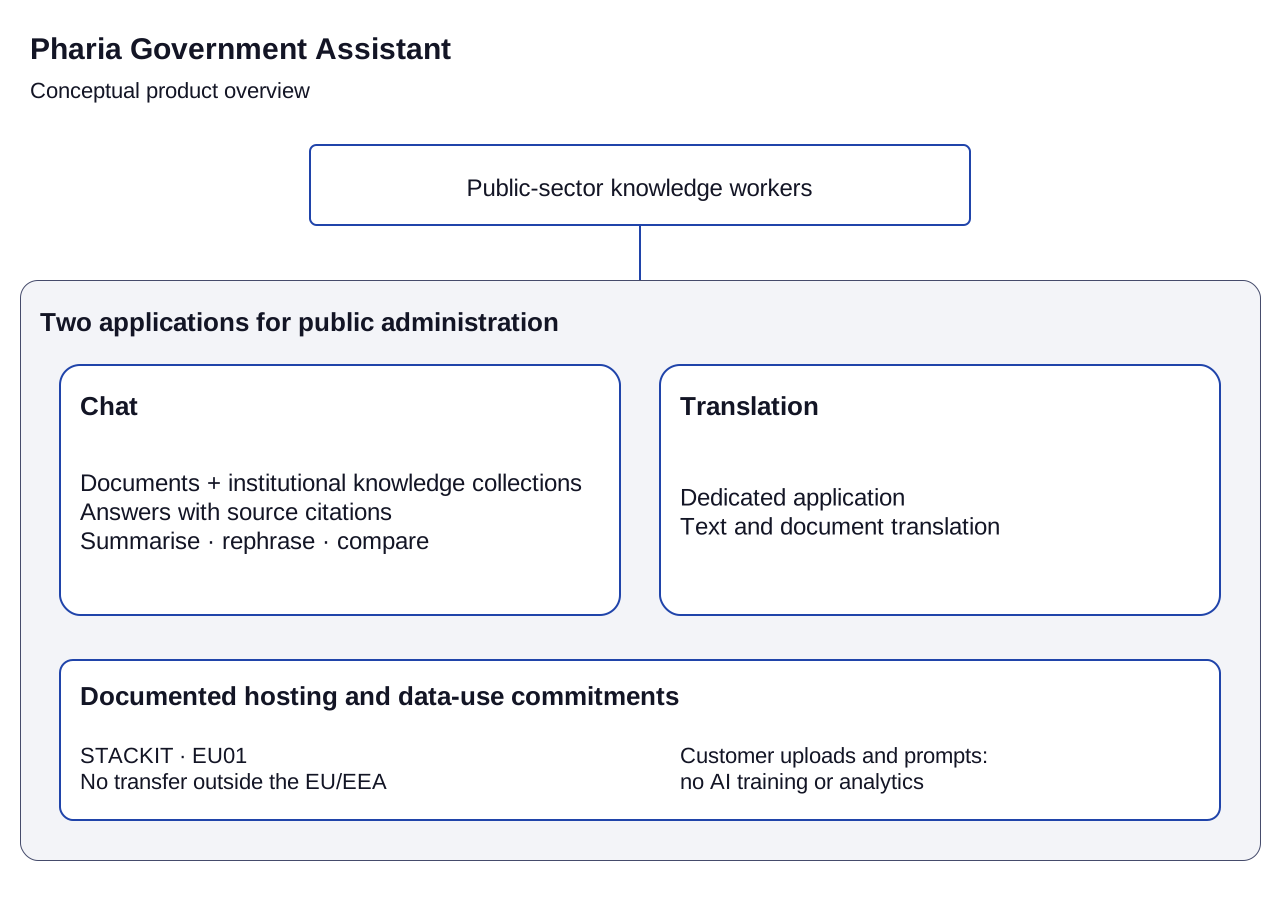
Product capabilities follow Aleph Alpha’s PGA documentation and the linked user guides. My role and scope are based on my professional account. The illustration below presents a conceptual product view.
Product model: knowledge, assistance and deployment
The overview connects the user’s work with the two applications and the documented operating environment.

Text description of the diagram
- Public-sector staff use the assistant for their work.
- Chat works with documents and institutional knowledge; answers can include references for review.
- Translation is a separate application for text work across languages.
- The hosting and data-use boundary follows the product documentation. The illustration does not specify internal services or technical integrations.
Related services, products and projects
Contact
Send the project, requirements and timeframe by email.